By: Ulvi Monica Aulia, Pundi Sumatera
For the Suku Anak Dalam community, the forest has long been more than just a place to live, but also a source of health knowledge. It's where various medicinal plants are found and used to treat a variety of ailments, from stomach aches and fevers to assisting with childbirth. Knowledge of these medicinal plants has been passed down through generations, and in daily practice, women play a crucial role in preserving and utilizing this knowledge.
Women are often the ones caring for sick family members, foraging for medicinal plants in the forest, and preparing traditional concoctions. They know which plants can relieve fever, treat diarrhea, or heal wounds. This knowledge is not written down but is learned through experience and stories from their elders.
However, in recent years, the situation has begun to change. The forests that once served as a source of medicinal plants are dwindling. For some women of the Anak Dalam tribe in Dwi Karya Bakti Hamlet, searching for medicinal plants now means walking up to three kilometers to the remaining forest remnants. This journey is undertaken primarily when family members experience minor ailments such as stomach aches, headaches, nausea, or fever.
Environmental changes also influence how people treat illnesses. The younger generation now increasingly uses modern medicine from community health centers or clinics. Meanwhile, traditional medicine is still frequently used by parents and children. parent still choose herbal medicine for children because they feel it is safer than chemical drugs whose dosage they do not fully understand.
Seeing this situation, the female community members began discussing how to maintain knowledge of medicinal plants. This conversation then developed when the village government held a TOGA (Family Medicinal Plants) competition through a Posyandu (Integrated Health Post) activity. Initially, the female community members intended to participate simply as a form of participation. However, the idea arose to try growing medicinal plants in their yards.
Before starting, they first discussed with traditional elders and older members of the community who still possess knowledge of medicinal plants. From these meetings, they identified the types of plants commonly used for medicinal purposes and the possibility of planting them around their settlements. The elders also provided several tips for ensuring the survival of jungle plants when removed from the forest.
One of the lessons they remember is that plant seeds should be taken directly from the forest with the soil still attached to their roots. This soil is believed to help the plants adapt to their new environment when they are transplanted into their yards.
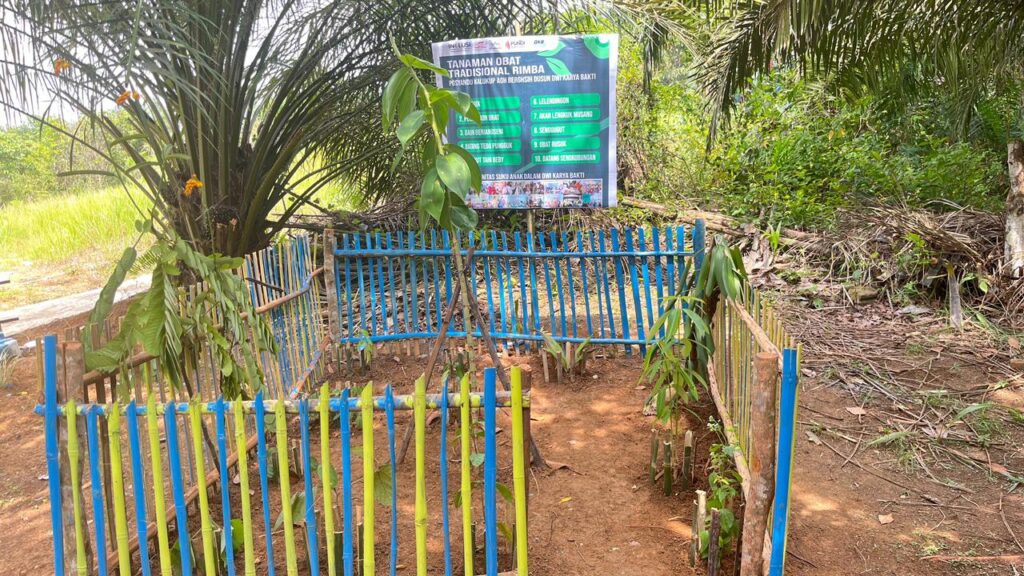
Armed with this knowledge, the female cadres began experimenting with cultivating several types of medicinal plants commonly found in the forest. They removed seedlings from the jungle and planted them around the SAD Women's School. This process wasn't always smooth sailing. Of the approximately fifteen plant species initially tested, not all of them survived.
Some plants don't thrive in yards. The soil conditions around residential areas differ from the moist, organic-rich soil of forests. Furthermore, areas now surrounded by oil palm plantations are exposed to more sunlight than the natural habitat of jungle plants, which typically thrive under the shade of trees.
However, through several experiments, they began to understand which plants were more adaptable. Adjustments were made, such as choosing a shadier location or adding organic matter to the soil. This process became a shared learning experience for the female cadres, helping them rediscover the characteristics of each plant.
Ultimately, seven types of plants successfully grew in the yard of the SAD Girls' School. Among them were: pattern which is used to treat toothache and as an antidote for wasp bites, pelengko pamunson for diarrhea, tendonitis to sprain, tebupungguk for earache, cecerek for stomach ache, ribs to relieve aches and pains, as well as lelendingon which is commonly used in herbal remedies to support the birthing process.
These plants are then cared for together as part of a small jungle medicinal plant garden in the community yard.
For the women, the presence of this garden has significantly changed their daily lives. When a family member experiences a minor illness, they no longer have to trek far into the forest to find medicinal plants. Some traditional medicine needs can now be met from their yards, closer to home.
Besides simplifying access, these medicinal plant gardens also help reduce household expenses for simple treatments. The plants planted can be used directly to prepare herbal remedies when needed.
Moreover, the garden also serves as a space to preserve the knowledge held by the women of the Suku Anak Dalam tribe. Knowledge about medicinal plants, previously practiced only in the forest, can now be continuously utilized and learned by younger generations.
Around this garden, women often share stories about how to prepare medicines, when to use certain plants, and their experiences caring for sick family members. Children and young women living near the SAD Women's School are also becoming familiar with the names of plants and their uses.
For the community, this small effort is more than just growing medicinal plants in their yards. It's also a way to maintain the connection between ancestral knowledge and our ever-changing daily lives.
As forests recede and environmental change becomes inevitable, women are finding ways to ensure their knowledge is preserved. Through simple gardens in community yards, they demonstrate that some of that knowledge can still be nurtured, learned from, and reused.
In this way, jungle medicinal plants not only survive as plants, but also as part of the knowledge and experience that continues to be passed down within the community.