by: Ulvi Monica Aulia, Pundi Sumatra
"After rain comes sunshine" is a familiar metaphor. We know it from Raden Ajeng Kartini, and we repeat it every year. For many women, it feels warm—a reminder that behind limitations, there is always hope for change and room for growth. From that simple meaning, we learn to believe that after darkness comes light, after pain comes healing, and slowly there comes happiness.
This belief often feels close when we see changes in ourselves. However, the story isn't always the same for all women, especially girls in the Suku Anak Dalam community.
In the past, many girls grew up in a predetermined space. From a young age, they knew who their spouse would be, when they would marry, and what path they would take in life. Their childhoods felt short—not because they wanted to grow up quickly, but because circumstances pushed them to that stage more quickly.
They live in the forest, far from outside access. Choices feel limited. Education isn't a priority; the main concern is how to eat, survive, and get through the day. Girls' voices are rarely present in decision-making. Life follows the inherited path: adhering to customs, upholding family honor, and marrying young.
Darkness here doesn't mean devoid of value. It's more about the limited space for dreaming, learning, and determining one's own direction. It's like walking with blurred vision, taking steps without truly knowing where you want to go.
But slowly, the light began to appear….
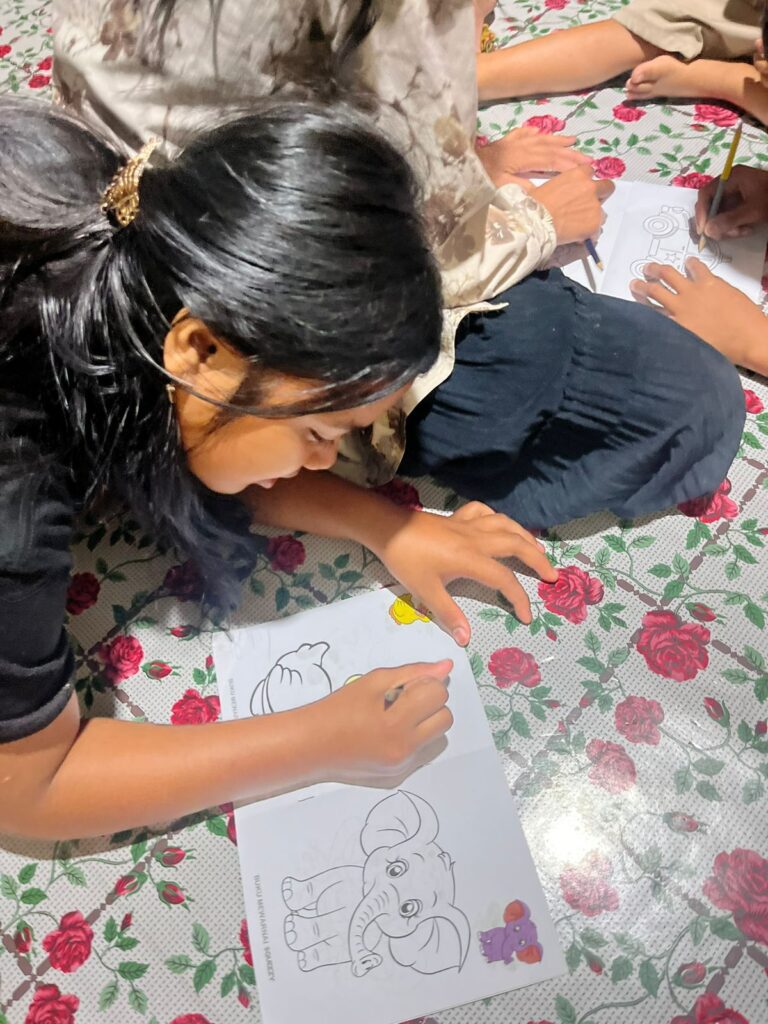
In some communities, changes are beginning to be felt. They are no longer completely nomadic; they have more permanent homes and a more secure livelihood. Girls are beginning to learn about education, even if it's just basic things. They are learning to read and write, and are beginning to voice concerns they once kept to themselves. They are developing aspirations, envisioning the future, and slowly realizing that life offers choices.
In this process, the role of a mentor is crucial. Being a mentor isn't just about teaching, but also being there to listen and create space. Many of them aren't used to expressing their feelings. Stories won't come naturally unless we're truly present and patiently waiting.
That's where the role of a bridge is truly felt…..
Girls are no longer simply being prepared for marriage. They are beginning to understand that they have the right to learn, grow, and even postpone major life decisions.
There is one story that still sticks.
Her name is Sinta. She's now a teenager, but currently still attending elementary school. Limited access a few years ago caused her to start school late. Her life journey reveals many things she didn't experience as a child. One day, a man proposed to marry her.
In the Suku Anak Dalam community, there's a term called "slave jenton meng'inai u'ang be'anak perempuan." This term refers to a man's commitment to marrying a woman by giving a portion of his earnings to the woman's family. This tradition has long been alive and well and is part of the local tradition.
When I first heard it, I felt mixed emotions. Some were questioning, some were anxious. But at the same time, I realized that my position was as a companion, not an assessor.
One day, Sinta told a story. Her voice was soft, her sentences simple. But it was clear from her eyes that she had something to say.
“I don't want to yet,” he said.
The sentence was short, but not light. Behind it were customs, family, and the expectations of others to contend with. I didn't immediately rebuke her parents. I chose to accompany Sinta—listening first, encouraging her, and slowly opening the space for her voice to reach her.
She spoke again, almost whispering. She didn't want to get married right now. She still wanted to go to school. Her words were simple, but the courage to say them was far from simple.
At that time, I simply said, "Stay calm and keep studying hard. Show your parents that you're serious. Maybe then they'll reconsider."
I didn't act immediately. I chose to wait a while. Not because I didn't care, but because I was worried that my actions would lead to Sinta being blamed. I didn't want my presence to make her feel like she was snitching.
A few days later, I tried a different approach. That afternoon, I went to her mother's house. We sat down, relaxed as usual, and made small talk. I started to tell her about Sinta—how she had been helping out a lot with community activities lately, participating in integrated health post (Posyandu) activities, accompanying coordination meetings at the village office, and even going on a study tour to a campus in the district.
I said, "With Sinta around, I feel really helped. I feel more comfortable carrying out my activities here."
I told her honestly, because that's how I felt. I didn't immediately bring up marriage. Finally, cautiously, I said, "It's a shame Sinta has to get married so soon. I hope she can continue her education... even high school is already very good."
I said that sentence slowly, without pressure.
On another occasion, I also included a lighthearted conversation about the risks of early marriage and the existence of legal regulations that protect children. This wasn't meant to scare people, but to open their minds.
Days passed. I don't know if those small conversations had any effect.
Until one day, the news came. Sinta's mother returned the money previously given to her by the man who wanted to propose to her.
In their community, that's no small thing. It's a sign of rejection. It means, at least for now, the wedding is off the table.
I was silent for a long time as I listened. There was relief, there was emotion, and there were feelings that were hard to put into words.
I don't know what ultimately touched Sinta's parents' hearts. Perhaps it wasn't just the words. Perhaps it was also because they saw Sinta's sincerity for themselves.
But one thing was certain: Sinta was starting to gain courage. Although in her own home she often had to follow others' wishes, that day she had a little room to choose.
I hope this decision isn't just temporary. I hope this is the beginning of Sinta continuing to move forward, learn, and grow until she's truly ready to determine her own life.
For Sinta, this is not just a postponement of the wedding.
This was the beginning of “light”—the light he fought for with his own voice.
Like the lyrics from Hindia in the song Berdansalah, Karir: “do what you want now.”
The sentence is simple, yet profound. It's an invitation to be brave in choosing, taking steps, and being yourself—something women haven't always had the opportunity to do.
This article is dedicated for every woman who is still searching for her light and for those who today begin to light their own light