By: Happy Octa Famelia, PPSW Jakarta
For most residents, the Village Development Planning Meeting (Musrenbang) may simply be understood as the village government's annual agenda for formulating development plans. However, for the women of Belimbing Village, Kosambi District, Tangerang Regency, Musrenbang has a much broader meaning. This forum provides a space to ensure that their experiences, needs, and daily challenges are truly incorporated into the village development agenda.
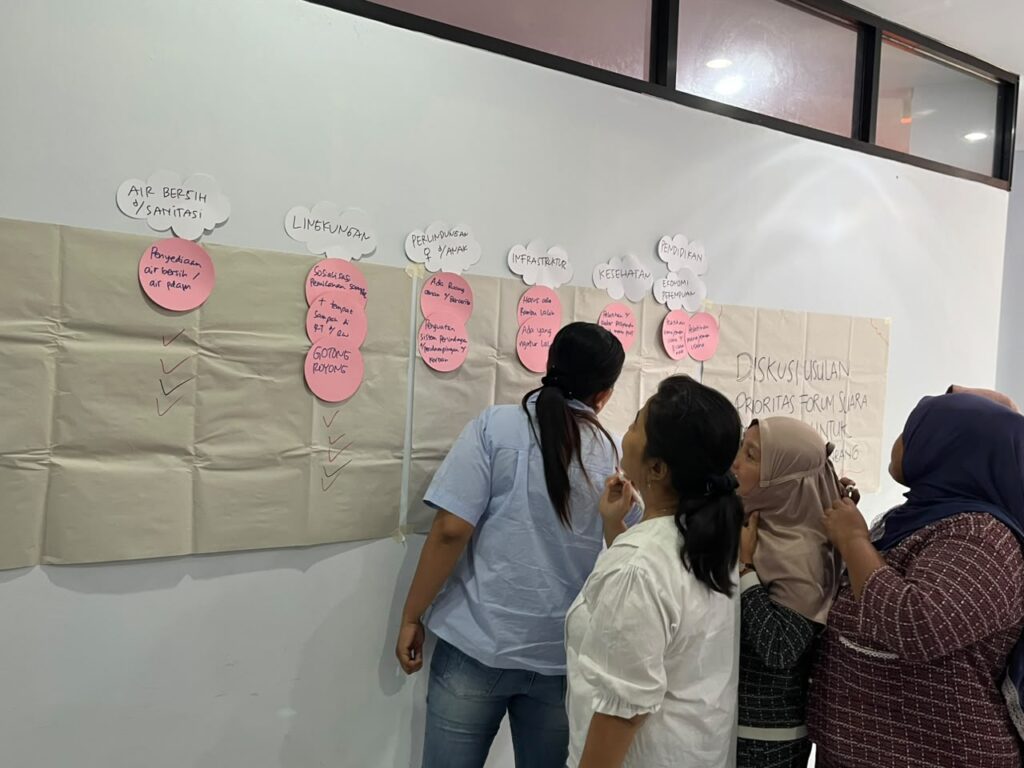
That's why, on July 21, 2026, twelve women from the Eternal Red Lantern Cooperative and the Women's Voice Forum gathered at the Belimbing Village Office. Facilitated by the Jakarta Women's Development Planning Board (PPSW), they came not simply to compile a wish list, but rather to discuss the most pressing issues affecting the lives of women, their families, and their communities before submitting their proposals to the Village Musrenbang (Village Development Planning Forum).
This forum is not a newly established space. Over the past few years, the Women's Voice Forum has become a platform for women in Belimbing Village to discuss, prioritize, and develop the courage to express their opinions in decision-making spaces. Every proposal submitted to the Musrenbang (Regional Development Planning Forum) always begins with a collaborative discussion to ensure it truly stems from women's needs, not simply following the village government's agenda.
This change didn't happen overnight. Before the Women's Voice Forum and the cooperative were formed, women were almost never involved in the Musrenbang (Development Planning Meeting). Even when women did attend, the floor was mostly given to certain groups, while other women, particularly those from the Benteng Chinese ethnic group, barely had a chance to express their views.
When PPSW Jakarta began assisting with the formation of cooperatives, the challenges were significant. The stigma against Benteng Chinese women remains strong. They are often viewed as a closed group, even deemed unnecessarily deprived of economic empowerment. When cooperative outreach was held at the Integrated Health Post (Posyandu), only one of the approximately 35 participants agreed to join. In addition to the stigma, the community also prefers borrowing from mobile banks, which are perceived as offering quick access despite the high interest rates.
Through the cooperative, the women gradually built trust, both among themselves and with the village government. They actively communicated with various parties, demonstrated the benefits of cooperatives for the community, and consistently attended various village forums. These efforts began to change the government's perception of them. While previously women's suggestions from outside the PKK group were rarely considered, now the Women's Voice Forum is invited to present the results of its discussions at the Musrenbang (Regional Development Planning Forum). Relationships that were once distant have transformed into partnerships. Village heads who previously tended to accommodate the suggestions of certain groups have now become members of the cooperative, opening up a broader space for dialogue.
However, open participation does not automatically mean that all women's proposals are implemented. Several recommendations remain unacted by the village government. However, this situation no longer leads to silence. The head of the Eternal Red Lantern Cooperative, Ms. Chen Fie, consistently provides questions, input, and evaluations to the village government when community proposals have not been implemented. This courage demonstrates a significant shift: women are no longer simply present as Musrenbang participants, but are beginning to fulfill their roles as citizens who oversee development.
In this year's discussion, the facilitator opened the conversation with a simple question, "What is the most important thing to propose in the Belimbing Village Musrenbang?" The question immediately brought up the issues they had been facing.
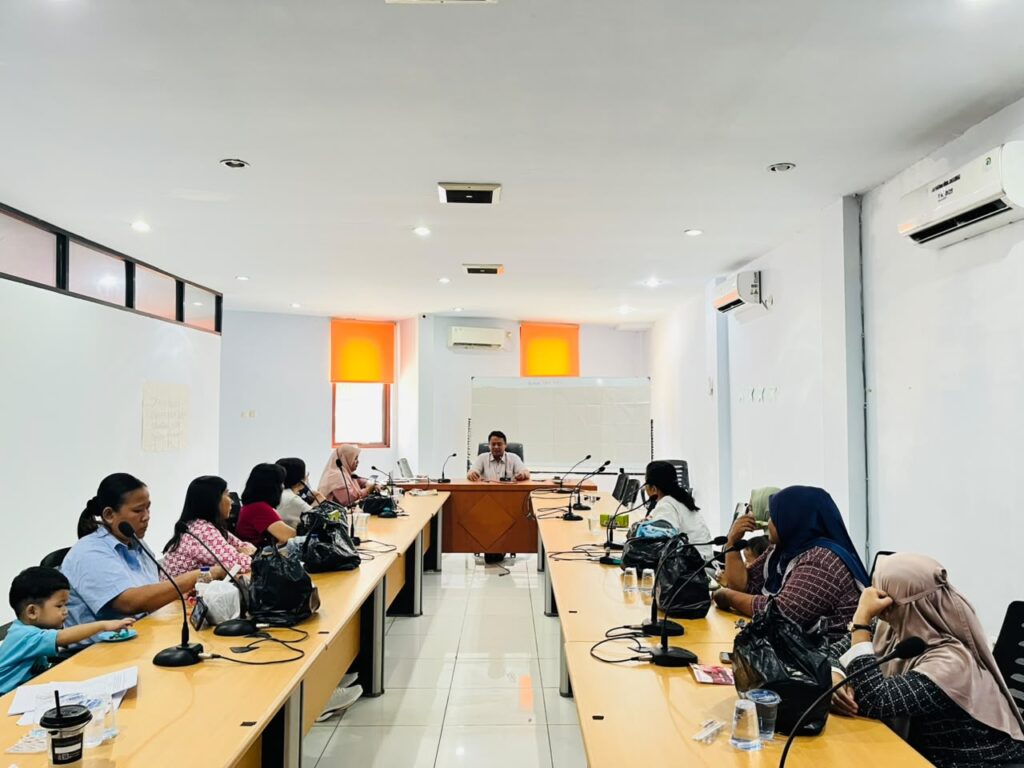
The first issue that emerged was waste management. According to participants, illegal dumping is increasingly being found in various corners of the village. Low public awareness of waste sorting and management leads to environmental pollution, river pollution, and the spread of various diseases.
They also see the waste problem as a non-existent issue. When rivers are polluted, the quality of the water used by the community also declines. Some residents still rely on river water or wells for their daily needs. Due to waste pollution, well water in some areas has become discolored and unusable. This situation particularly burdens women, as they are responsible for providing water for cooking, washing, keeping homes clean, and even caring for sick family members when environmental quality deteriorates.
On the other hand, the sheer volume of accumulated trash has led some residents to choose to burn it. While this practice reduces waste volume in the short term, it produces air pollution that worsens environmental quality. For women, the waste problem is not simply a cleanliness issue; it is closely related to family health, access to clean water, and the community's quality of life.
Besides the environment, participants also raised the issue of child nutrition. Mrs. Atikah proposed training for Posyandu (Integrated Health Post) cadres on developing supplementary feeding (PMT) menus that meet the nutritional needs of toddlers. She noted that the supplementary foods currently provided do not fully meet the nutritional standards required by children.
Meanwhile, Ms. Enggita proposed capacity building for women home-based entrepreneurs, from grocery store owners to food businesses to knitters. They need training in business management, marketing, and financial management so that the businesses that currently support their families' finances can grow more sustainably.
After discussing all these issues, the Women's Voice Forum agreed on three priority proposals to be brought to the Village Musrenbang, namely community-based waste management through waste sorting education and routine mutual cooperation activities, women's economic empowerment through business and financial management training, and increasing access to clean water and sanitation through the development of clean water networks and improving sanitation services.
The forum also appointed three representatives to present the proposal at the Village Musrenbang (Development Planning Meeting): Ms. Chen Fie, Ms. Dewi, and Ms. Lanni. This appointment wasn't simply a task allocation, but rather part of the process of building women's leadership, enabling them to speak directly in decision-making spaces.
Interestingly, the proposals emerging from the Women's Voice Forum don't just address women's needs in a narrow sense. Environmental issues, clean water, children's health, and economic empowerment are viewed as interconnected and impacting the lives of all villagers. This perspective demonstrates that women bring their everyday experiences to bear on formulating development strategies.
The Women's Voice Forum has become more than just a gathering place for cooperative members. It has evolved into a community-based political learning space for the women of Belimbing Village. Here, they learn to discuss issues, agree on shared priorities, develop arguments, and even confidently submit proposals to the village government.
For the Chinese women of Benteng, who for years faced stigma and limited access to decision-making spaces, the biggest change isn't simply being invited to the Musrenbang (Development Planning Meeting). The more fundamental change is that they now have the space to determine for themselves what's important for their village, voice their opinions collectively, and continuously monitor development to ensure it truly meets the community's needs.