By: Haryanto, KKI Warsi
Heavy rain fell for three consecutive days from late March to April in Suo-Suo Village, Tebo Regency, Jambi. The river overflowed, and Simarantihan Hamlet, home to the Talang Mamak indigenous community, was slowly submerged. Seven houses were knee-deep in water. Some furniture and garden produce were swept away by the current. When disaster strikes, many can only surrender, but not Sikar.
Sikar is a member of the Talang Mamak community and is known for his active involvement in social activities and community outreach. He is no stranger to advocacy and cross-stakeholder communication. Together with Rusli, a facilitator from the Indonesian Conservation Community (KKI) Warsi, Sikar has repeatedly helped residents access basic services and advocated for the rights of the Talang Mamak indigenous community.
As soon as he saw the floodwaters threatening people's homes, Sikar immediately took action. He recorded damage data, identified affected residents, and took simple documentation using his cell phone. That evening, he contacted Rusli and informed him of the emergency situation facing the residents of Talang Mamak in Simarantihan Hamlet.
Rusli responded quickly. As a long-time community facilitator, he immediately coordinated with the Tebo Regency Social Services Office. He submitted a complete report, including the data collected by Sikar, and urged immediate aid delivery to the difficult-to-access location.
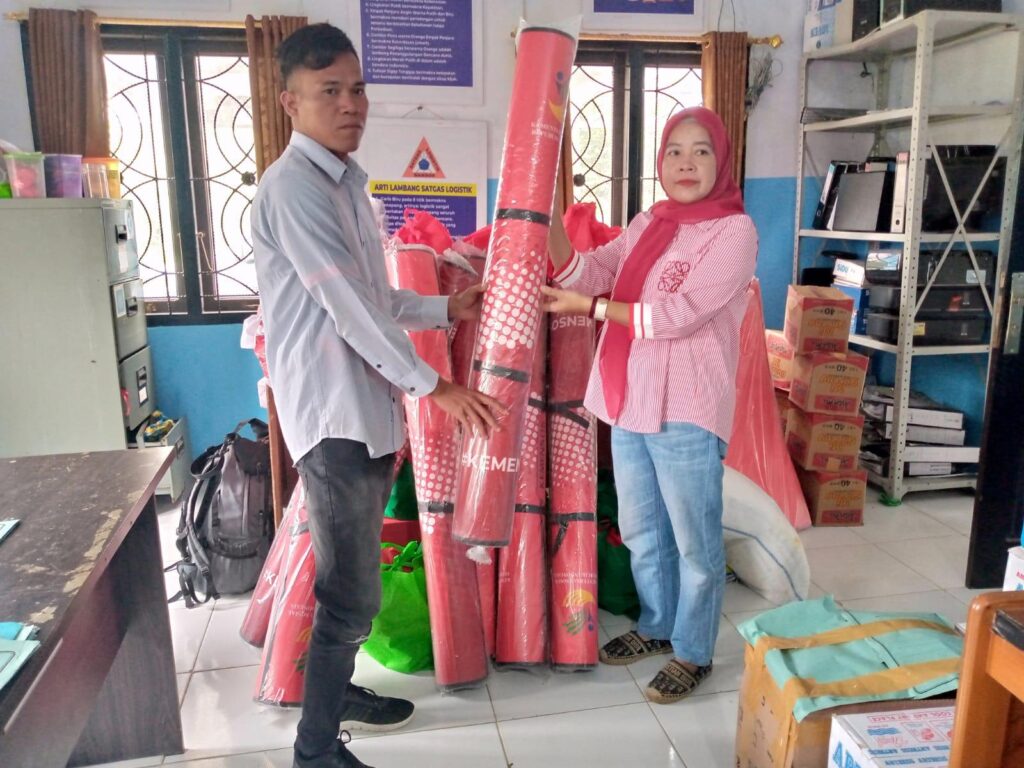
Shortly after, good news arrived. The Tebo Social Services Department responded to the report by dispatching an emergency relief team to Suo-Suo Village. With support from the village government, which had also been coordinated by Sikar, the team finally arrived in Simarantihan Hamlet, bringing supplies such as basic necessities, blankets, toiletries, baby supplies, and emergency kitchens.
Residents welcomed the aid with gratitude. Many didn't expect it to reach their remote hamlet. "If it weren't for Sikar, no one would have known we were flooded," said Suryati, one of the affected residents.
Sikar doesn't consider his role to be significant. "I'm just sharing what we're experiencing. What's important is that our community isn't left alone in this time of hardship," he said humbly.
This flooding event demonstrates that the presence of cadres like Sikar, supported by facilitators like Rusli and networks of institutions like KKI Warsi, is crucial in ensuring indigenous communities are not left behind. Amidst the forest and the threat of disaster, the spirit of mutual cooperation and teamwork remains a key pillar.
The existence of Sikar also demonstrates the importance of access to basic services for indigenous communities during disasters. With Sikar, the Talang Mamak indigenous community can access these services. They also understand the process of obtaining basic services. This is also the goal of the Estungkara Program, implemented by KEMITRAAN with KKI Warsi: realizing inclusive development in Indonesia, especially for indigenous communities.