By: Dewi Utari, SCF
Even as the sun beat down on his face, Agus never stopped smiling throughout the Maros Hepi activities. As a young cadre from Bontomanurung Village who is avid mountain climber, Agus served as a field guide, navigating the rugged trails, connecting digital creators with local residents, and explaining traditional wisdom to them.
In Bara Hamlet, Ms. Mirnawati and Ms. Sabariah were equally enthusiastic in entertaining digital creators with engaging stories about education in Bontosomba Village, including the story of the "underground school." Meanwhile, in Pattung Hamlet, RT 03, Bonto-Bonto Hamlet, Bontosomba Village, husband and wife Andi and Niar graciously facilitated the needs of digital creators, by providing discussion spaces, resting places, and acting as a communication bridge with local residents.
It is this spirit of organizing the cadres from the separate hamlets that makes this activity possible. cHarity Maros Hepi is more than just a social visit. It's a meaningful encounter between the digital world and village realities, and proof that social transformation begins with the strength of local communities themselves.
For three days, from 19 to 21 May 2025, Bontosomba Village and Bontomanurung Village in Tompobulu District became the center of attention thanks to social activities. Happy Maros. Twenty participants from diverse backgrounds came not only to bring camera equipment and create content, but also to participate in social protection efforts for children, indigenous women, and people with disabilities.
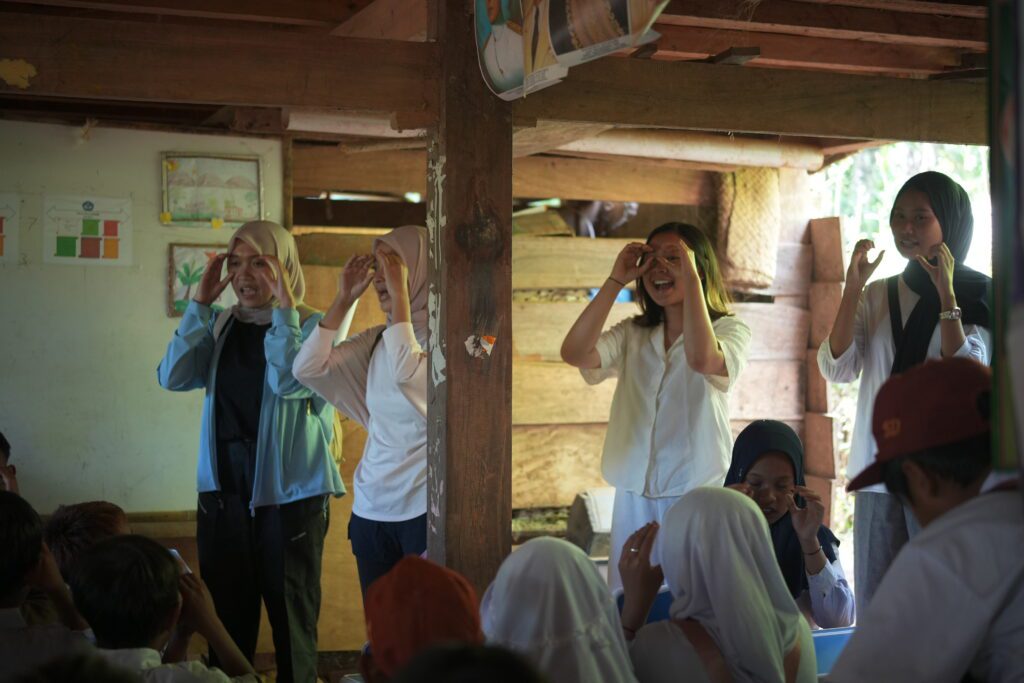
Amidst limited access to basic services—a long-standing challenge for Bontosomba and Bontomanurung Villages in Maros Regency—the presence of these digital creators brings renewed enthusiasm. They collaborate with various parties to provide direct health services and education to residents. Their activities include mass circumcisions by the Sunathrone team, dental health check-ups and education by the Xtra Smile team from Malaysia, and counseling on contraceptive use, stunting prevention, and parenting practices that support child growth and development. The children also receive motivational sessions on aspirations, building self-confidence, and positive body awareness.
"Many children here are still not used to sharing their dreams. Yet, all children should feel worthy of dreaming," said Shifa Kelana, a traveler and digital creators involved in children's educational sessions. He also emphasized the importance of providing sign language books for children with great potential but hearing impairments.
Neneng Risma Wulandari, a comedian and active in social movements, highlighted the lack of basic medical supplies in remote villages. "Medication for skin allergies, for example, is often desperately needed by residents, but it's hard to find. It's a small but important thing," she said.
Reza Dwi Yanda, known as Ejak, a digital creator who frequently speaks out on social issues, is concerned about children's accessibility to school. "There's a river they have to cross every day. If we can't do it all, at least build a bridge at the most difficult point," he said.
Similar input came from Andi Berlian Tanwir, widely known on social media as Wakattan. As a healthcare worker, he explained the importance of having healthcare workers living in villages. "Many cases could be prevented if there were healthcare workers who could directly intervene on the spot," he said.
All these findings and suggestions were then presented directly to Maros Deputy Regent Andi Muetazim Mansyur in a meeting on the evening of May 21st at the Deputy Regent's official residence. The discussion was warm and open. The Deputy Regent stated that he would follow up on the input and even invited participants to return to review the development of the two villages in the future.
The Maros Hepi program is also part of a broader effort in the spirit of the Estungkara Program and the Sulawesi Cipta Forum (SCF). The Estungkara Program, also supported by KEMITRAAN, has contributed to building awareness and capacity among indigenous communities in Maros Regency, including in terms of social protection and strengthening indigenous women's leadership. Meanwhile, the SCF supports the creation of multi-stakeholder collaboration spaces where local communities, government, and external partners can meet in a spirit of inclusivity and mutual cooperation.
Maros Hepi became a meeting point between the digital world and the realities of village issues. The values of inclusivity were felt alive: children were encouraged to talk about their bodies, indigenous women were involved in family health discussions, and children with disabilities were given space and attention. Participants did not come as guests, but stayed in residents' homes, shared meals, walked to the activity location, and heard firsthand stories that had previously gone untold. This activity emphasized that digital engagement need not be separate from real social work on the ground.