By: Ulvi Monica Aulia, Pundi Sumatra
That morning, Ratih was already busy before the sun was fully up. The floor had been swept, the breakfast dishes had been washed, and the kitchen was tidy again. There was still one more house she had to visit to help clean before she could finally leave for her village activities. And so Ratih's day went.
In the Suku Anak Dalam (SAD) community, domestic work is a part of girls' daily lives. Taking care of the house isn't just about helping their parents, but also a responsibility they've been carrying since childhood. Therefore, when Ratih began participating in activities outside the home more frequently, not everyone immediately understood her choice.
Several times, she had to ask permission to leave early while activities were still underway. It wasn't because she didn't want to study, but because the family's lunch hadn't been cooked yet and homework was still waiting.
Ulvi, a community facilitator, still remembers those days. "As midday approached, they started to get restless. They said they had to go home because they hadn't cooked or washed the dishes."
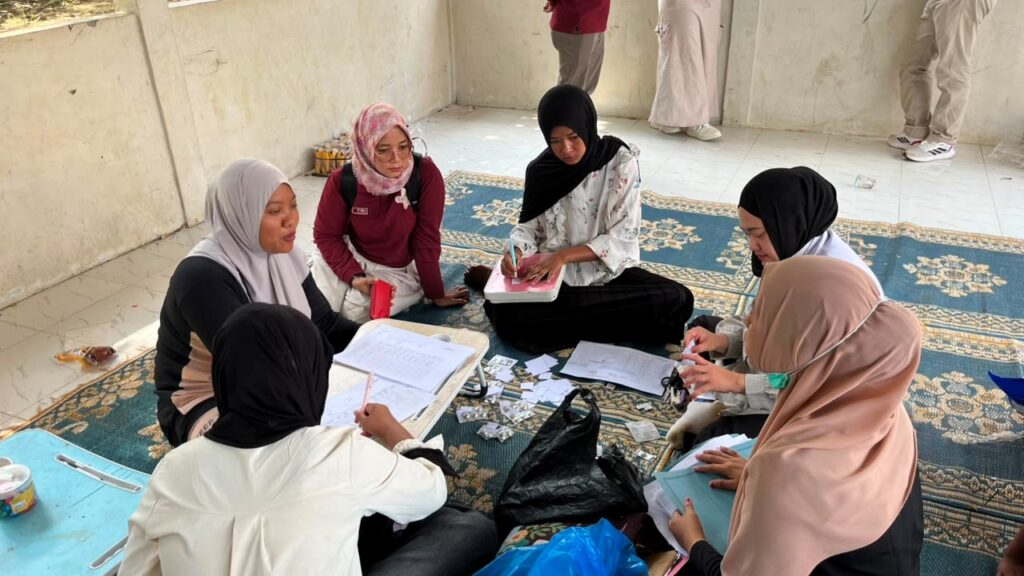
Instead of asking them to choose between home and activities, Ulvi encouraged them to find ways to maintain both. They began making it a habit to complete household chores early in the morning, before attending training or community meetings. This simple approach gradually reduced their family's objections. They continued to fulfill their responsibilities at home but also had space for learning.
Ratih was one of the most diligent participants in every activity. She didn't talk much during the forums. She often sat and listened, taking notes on things she deemed important. But every time there was a new activity, Ratih always returned. The changes in her didn't happen all at once.
She didn't suddenly become a confident speaker in front of large crowds. What changed first was her confidence in taking on roles within her immediate community. Little by little, Ratih began inviting residents in her group to participate in monthly Posyandu (Integrated Health Post) activities. Badai's group, consisting of seven families, no longer had to be visited individually by a chaperone. Ratih helped convey information and remind them of activity schedules.
"Now I don't need to visit all the residents," Ulvi said. "Ratih has helped invite them."
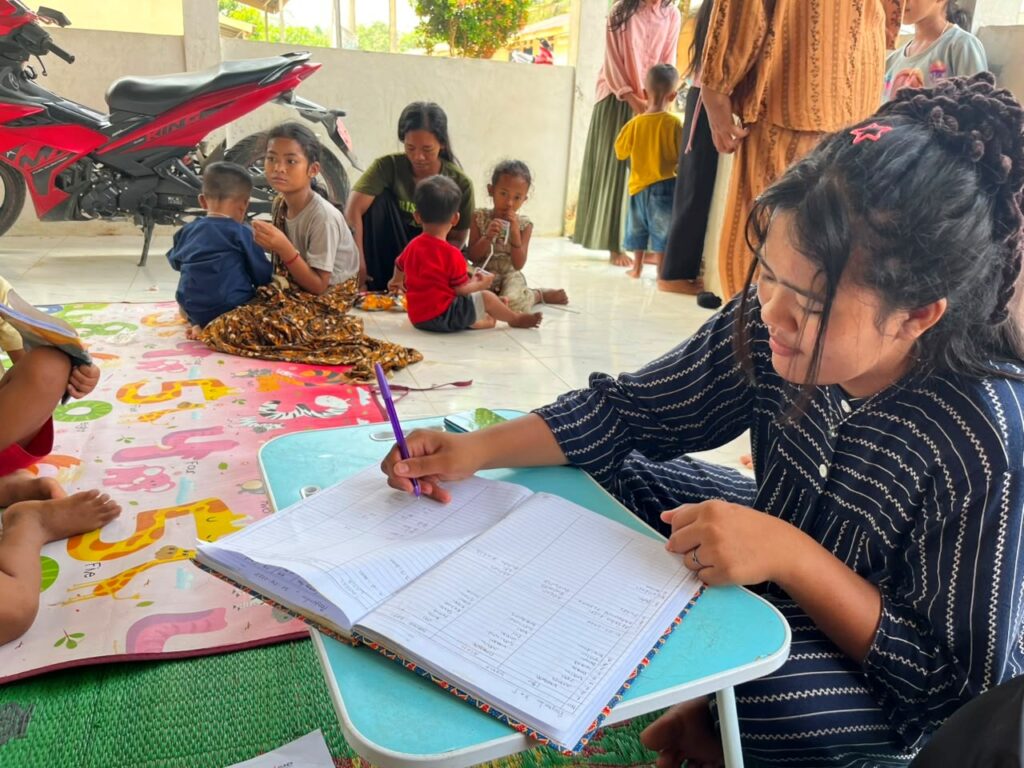
At the time, Ratih was still in her second year of junior high school. Ita and Siska experienced similar changes. The various learning sessions they attended during their mentoring sessions not only increased their knowledge but also strengthened the community's trust in them. Siska, for example, now began to understand the process of civil service administration. Residents seeking civil service documents no longer always sought out a mentor. They began coming to Siska to inquire about the necessary administrative requirements.
This trust apparently also extended to the Bungo Regency Health Office and the Rantau Kloyang Community Health Center. When the government began implementing the Advocacy Program for Malaria Interventions in Mobile and Migrant Populations (MMP), they needed cadres from the Suku Anak Dalam community. The Suku Anak Dalam community is considered to be at higher risk of malaria because some of their activities still take place in forest areas through traditional practices. bemalom.
The first name that came up was Ulvi. But she declined. "If I were the cadre, I'd be out of the village often. It's better to have my own cadres. They already know the community and can carry out this task."
The proposal was initially met with skepticism. Health workers weren't entirely convinced that the young women from the SAD community were capable of carrying out the duties of malaria cadres. After several discussions, the village government finally issued a decree designating Ratih, Ita, and Siska as malaria cadres.
For all three, it was a new experience. They attended training on malaria, covering transmission, prevention, data collection, and medication administration. Ratih, who had previously rarely spoken, now had to stand in front of the community to explain why malaria medication must be taken to the end. The task proved to be no easy feat.
For years, the SAD community has been more familiar with using medicinal plants obtained from the forest to treat various ailments. Now, many of these plants are becoming increasingly difficult to find as the forest area shrinks. Furthermore, malaria treatment must be carried out according to the instructions. The medication must be taken for three consecutive days for the treatment to be effective.
That's why Ratih, Ita, and Siska's work doesn't stop after the outreach program is over. They return to residents' homes, ensure they're taking their medication as scheduled, record their progress, and then report it to health workers. To build public trust, health workers even introduce them directly to each outreach activity.
"If Ratih, Ita, and Siska come, listen to them. They are our cadres."
The sentence was simple, but it brought about profound change. Residents began to accept their presence not just as young people in the community, but as individuals trusted to help maintain public health. Their work progressed more smoothly. Data collection was conducted routinely. The medication distribution schedule was more organized. Monitoring medication intake became easier because it was carried out by people who lived within the community.
For Ratih, Ita, and Siska, the incentives they receive as cadres have certainly helped supplement their income. But what's more meaningful is the growing confidence in their abilities. A few years ago, they still had to negotiate for permission to participate in activities outside the home. Today, the government has entrusted them with running a public health program in their own community.
This change didn't happen overnight. It grew slowly, starting from humble study spaces, from the courage to finish homework early to attend training, from the trust of a mentor who chose to give his cadres a chance, and finally, from recognition by the community and the government.
And for the three young women of the Suku Anak Dalam tribe, this belief became a new step in taking on roles they had never previously imagined.