By: Sulawesi Cipta Forum (SCF)
"If it's done ci-io"You must always be busy," said Imran with a chuckle.
“What are you busy with? People are just trying to survive. ji this,” Oda replied.
That night, the Palm Sugar Center Building in Bonto Manurung Village was still alive. Two women ground palm sugar with old bamboo. A young man opened and closed an oven. From a speaker in the center of the room, Elvy Sukaesih's voice sang sadly, "The Old Building."
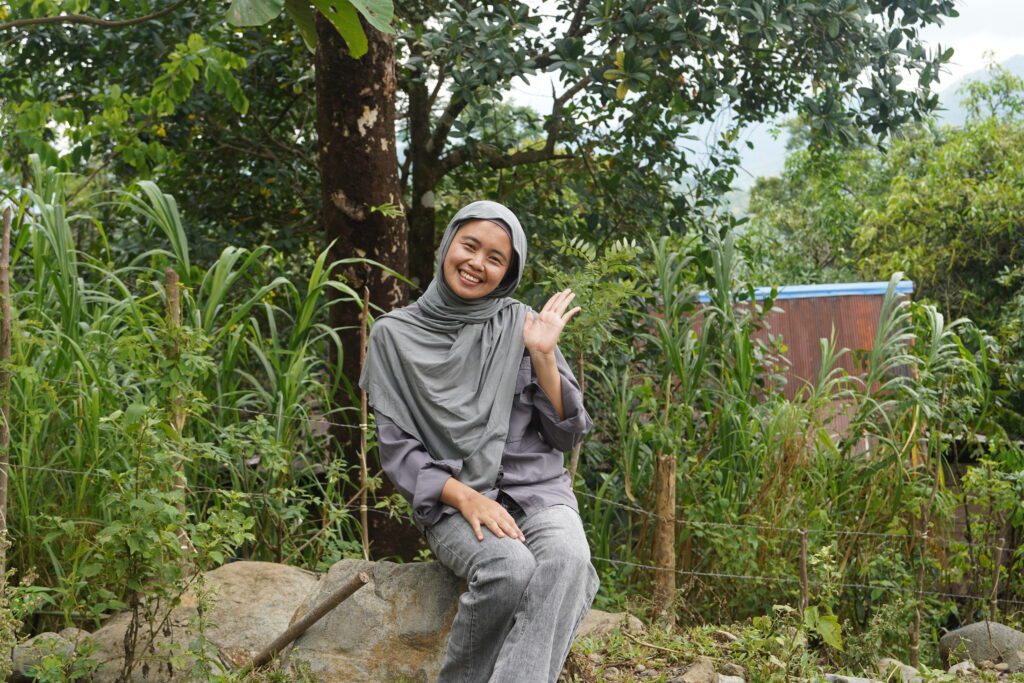
Oda sat in front of a glass cabinet filled with packages of palm sugar. The woman, in her thirties, then began to tell her story to Imran, the village facilitator who had only been working there for four months.
Oda's journey to that point wasn't straightforward. She studied agribusiness at the Muslim University of Indonesia in Makassar. Her parents, cattle traders, initially wanted her to become a policewoman. Instead, Oda chose agriculture, encouraged by her older brother, a police officer.
"He said, if I study agriculture, I can go back to the village and clear land."
In 2018, after graduating, Oda returned to Bonto Manurung. The village, in Tompobulu District, Maros, had only been removed from its underdeveloped status two years earlier. PLN electricity was still relatively new, the roads were not yet fully repaired, and internet access was virtually non-existent.
It was precisely about the internet that Oda began to make changes.
"I actually don't feel comfortable staying in the village for long, not because of the village, but because there is no internet connection," he said.
His neighbor in Maros happened to own an internet networking business. Oda brought him into the village. He began selling Wi-Fi vouchers, opening up access that had previously been virtually unavailable.
The simple desire to stay connected to the outside world has slowly changed the way Bonto Manurung residents communicate, seek information, and use their smartphones. Oda, however, did not follow his brother's advice to clear land.
He chose to open another path, connecting his village with the world.
In February 2022, the Maros Regency Government announced plans to develop a Palm Sugar Industry Center in Bontomanurung Village. The idea arose from a dream of turning Tompobulu into a tourist destination and palm sugar into a souvenir from the Maros mountains.
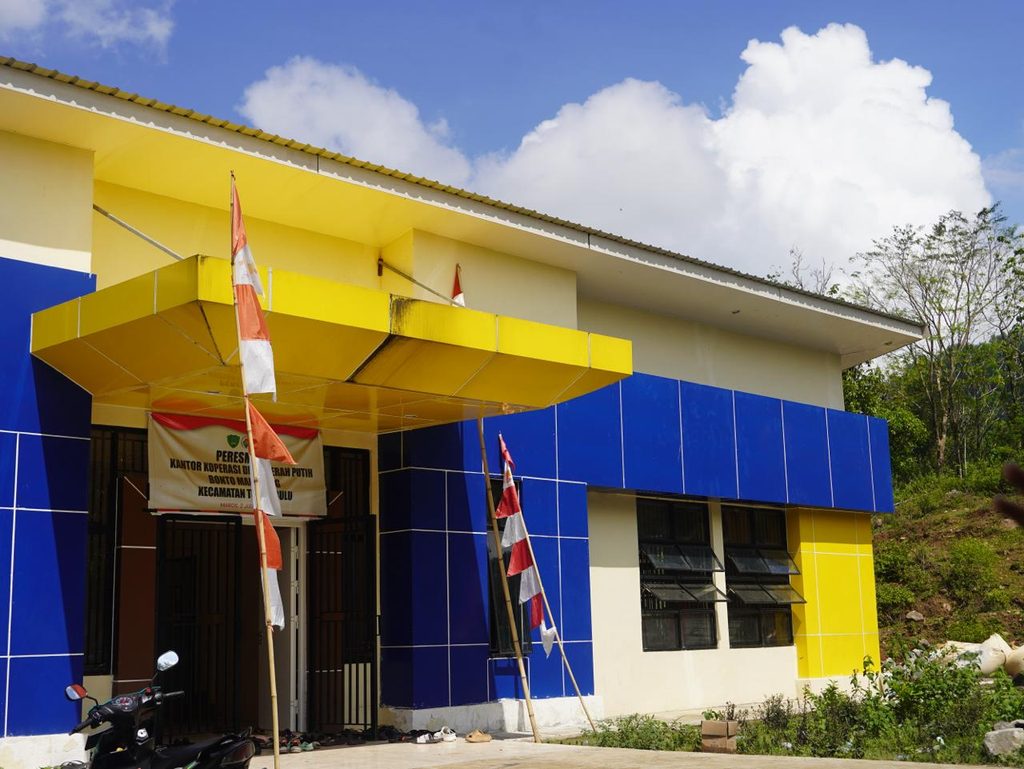
A year later, the Palm Sugar Center Building was built. Machines were brought in, a civil servant was appointed in charge, and Oda's husband was asked to help manage it. The vision was grand. The building would be a place where palm sugar would be upgraded—from raw material to branded product, entering supermarkets, and generating more income for the community.
But the "city people" way of working didn't necessarily fit in with the village. Oda's husband tried to run the business the way he'd been taught. The results were stagnant. Throughout 2023, the Sentra Building was more often empty than in production. At night, residents even feared passing by. The building, built to revitalize the village economy, was slowly being considered a dead structure.
Oda hadn't found the answer yet. At the time, she was still busy with the business she'd built through the YESS-IFAD program. Occasionally, she would talk to her husband about the impasse in the palm sugar business.
In 2024, her husband got a job in Kolaka and had to leave. Oda gave up their long-distance relationship for the sake of their three children.
"I gave my blessing to my husband working there, even though it meant a long-distance relationship. At least I could see my three children more peacefully," she said with a chuckle.
Before leaving, her husband left her one thing, namely how to run the Sentra Building.
“It taught me to be more independent.”
On his first day working alone, Oda stood in the middle of a building that was on the verge of losing its life. White paint peeled from the cracked walls. Dust covered the barred windows. Machines stood useless, while the tools that should have been the mainstay of production had become foreign objects.
"Those tools were just left lying around. We were taught in a rush, and in the end, we didn't know how to use them," he recalled.
The building had reason enough to be abandoned. But Oda saw something else. The people who depended on it for their livelihood. "My bones are already broken, but it's so hard for me to leave this building because the backbone of my life also works here."
Hope drove Oda to continue searching for what could be salvaged from the Sentra Building. He dismantled and reassembled the machinery himself, attempting to make palm sugar from two ingredients: palm sap solution and brown sugar palm shells.
The results were different. The palm sugar solution produced crispier and sweeter crystals. The coconut palm sugar produced a darker color and wetter crystals. Oda imagined palm sugar made from palm sugar would be more profitable. The problem was that it took longer to make, and the market couldn't wait.
Every day, he recounts the money he has. He calculates how much is for gas, electricity, raw materials, and workers' wages.
"There's no help. I've used up all my capital learning to use these tools," he said.
Amidst the impasse, Oda frequently called her husband abroad. But after she hung up, the building fell silent again. She slept only about four hours a day. Her children grew up far from her sight, while her days were spent among machines and calculating bills.
In 2024, Oda met Sultan, the manager of the Sulawesi Cipta Forum in the Estungkara Program. In a conversation that Oda described as relaxed, even involving laughter, Sultan said something that bothered him.
"He said my way of doing business was wrong."
Oda didn't immediately know what was wrong. He felt like almost everything he'd done in that building hadn't been right. Later, he understood. He'd been trying to sell palm sugar under his own brand, competing with much larger distributors. However, Sentra Aren didn't have to be the front-runner. He could have acted as a raw material supplier.
The change in position changed Oda's approach. He went back to assembling machines, trying, failing, fixing, and then trying again. For several weeks, production continued. Until the raw materials ran out.
That's where the bigger problem arises. Palm sap and palm sugar are available in Bontomanurung and Bontosomba, but the farmers are already tied to traders.
"There's actually still plenty of palm sugar in the village, but they supply it to traders. Traders first make agreements with farmers," Oda said.
Traders have a more attractive method for farmers: cash payments. Oda hasn't been able to replicate this. "I can't do that."
Markets were opening, but raw materials were still in short supply. Oda was again faced with the same problem: how to keep Sentra alive without depriving farmers of the incentive to sell to him.
In the same year, the Estungkara Program held activities Social EntrepreneurA partnership that brings together palm sugar entrepreneurs and various stakeholders. Dewi, who has been observing the development of the palm sugar business in Bontomanurung for a year, also assisted in the process.
The activity was simple. It took place in bamboo houses not far from the Sentra Building, occasionally interrupted by the pungent smell of chicken waste. Dewi later remembered it as a mundane activity. Oda, in fact, brought home something.
“Because of that activity, I am more confident in talking to traders.”
Since then, Oda has stopped forcing himself to buy directly from farmers. He prefers to source sugar from traders to ensure a steady flow of raw materials to the Center.
"It's okay to make a small profit, as long as there are always raw materials."
The meeting also brought him into contact with the hamlet head. From there, news of the Center began to reach more people in the village.
"If I hadn't met the hamlet head at that time, they wouldn't have known about Sentra's fate. Sentra actually really wanted to help the palm sugar farmers."
Following this activity, Oda became more active in meeting and building relationships with two major palm sugar brands in Makassar. He didn't work alone. Village heads helped introduce the Sentra Building and communicate the purchase price offered to palm sugar farmers. Slowly, word of the shelter and more reliable prices began to spread from farmer to farmer.
The impact was immediate. Sales, previously around 100 kilograms per day, increased to 230 kilograms. Supplies of brown sugar began to arrive and pile up in the Center Building. Equipment that previously seemed isolated, sometimes even like antagonists in a story, now began to find their respective roles. Furnaces, grinding machines, drying areas, and storage rooms worked together, following a new rhythm created by the increasing volume of incoming sugar.
However, increased supply meant increased work. To dry, process, and grind that much sugar, Oda needed more hands. He then invited three women to join him. With these additions, the number of daily workers at the Sentra Building reached seven.
For some mothers, the job may seem simple: show up, work, and go home with a paycheck. But for them, the extra income has a much deeper meaning. One mother lives not far from the Sentra Building. Every morning, she takes her only child to elementary school. After ensuring her child is in class, she walks to the Sentra Building and works until it's time to go home.
Since then, the Sentra Building has slowly lost its former appearance. The once dark and rarely used space, which Oda even described as a gathering place for spirits, is now lit up from morning. The sounds of people working, sugar being dried, machines whirring, and conversations filling the previously silent spaces. The building is no longer simply a place to collect palm fruit. It has become a space where people work, meet, and earn a living.
But the story of the Central Building is not over yet.
Behind the increasingly crowded building, another story slowly emerges: about women who come to work after finishing their housework, about working hours that get longer as orders increase, and about bodies that must continue to work when the day should be over. Oda begins to see that increased production doesn't necessarily mean increased prosperity for everyone.
From there, Oda's perspective slowly changed. He began to notice who worked the most, who went home last, and who had to divide their time between work at the Central Building and the work waiting at home.
The story about the Central Building will continue in Part II