By: Bambang Sagurung, YCMM
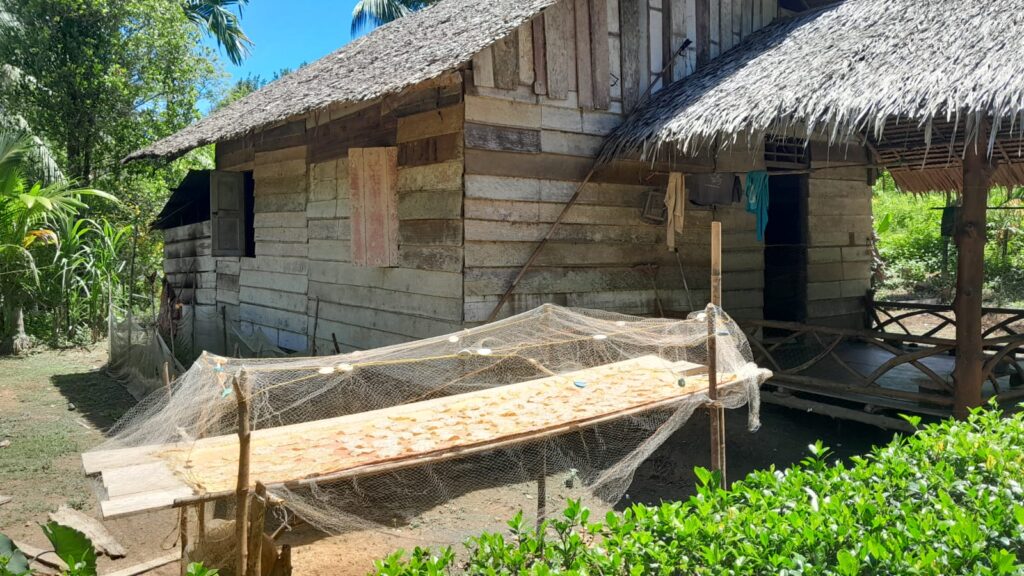
In a corner of the two-by-three-meter kitchen, with its plank floor and sago palm roof, the sound of stones pounding against each other is heard repeatedly. Anni (43) sits cross-legged, pounding jengkol fruit on a clear plastic sheet covered with a wooden board. Her right hand rises — then falls again with a patient rhythm.
"You really have to be patient to pound it," he said with a faint smile.
For Anni and many housewives in Malancan, jengkol is more than just a food source. It used to be a sought-after source of seasonal income. Five to ten years ago, when prices were still Rp 5,000–Rp 7,000 per kilogram, the harvest season could bring in millions of rupiah in additional income for families. Some earned Rp 15–30 million in a single season. The jengkol fruit was collected, taken to Pokai port, and then sold to collectors from Padang who arrived on the weekly ferry schedule.
Now, prices have dropped to Rp 2,000–Rp 3,000 per kilogram. Jengkol is no longer as valuable as it once was. Trees that were once harvested are now often left to bear old fruit on the trunks.
“People just leave it alone because it has no value,” Anni said.
The price drop isn't just about economics. It's affecting how people view their own garden produce—from something to be proud of to something to be almost ignored.
That's the situation YCMM encountered through its Estungkara Program while assisting communities in Malancan last year. Complaints about jengkol trees were common—especially from families who owned numerous trees but no longer benefited economically.
Amidst this anxiety, the facilitator sought alternatives. From discussions with mothers and a search for simple ideas, an idea emerged that wasn't too far from local knowledge: processing jengkol into crackers.
Some mothers have actually seen or tried making it—learning from the experiences of newcomers. What they lack is the courage to turn it into a business.
"Besides not being sure if anyone will buy, we also don't have a definite place to store them," said Anni. Hesitation is natural. Production involves effort, time, and risk. Without a clear market, efforts can be in vain.
The mentoring then focused on small steps: organizing processing, providing simple needs such as glass plastic, and helping market the production results outside Malancan.
Not everything was perfect—some were broken, some were misshapen. But the experiment went ahead. And apparently, some people bought them.
Jengkol crackers are sold in the Sikabaluan sub-district center. The purchases aren't large—half a kilogram to two kilograms—but they're enough to change your mood.
"Even though it's not much, we're confident because someone bought it," said Anni.
The selling price reaches Rp 70,000 per kilogram. From initial production, some mothers earn an additional Rp 150,000–Rp 500,000. For some families, this means money for groceries or children's school fees.
The following year, the women began to resume production on their own initiative. Discussions with their mentors focused more on pricing and how to use the proceeds—a sign that the process had shifted from facilitation to independence.
Cracker production isn't always done alone. Some people work in groups of two or three in one house. Some share roles, and some borrow equipment from each other.
"If a friend doesn't have plastic glass, we get together or take turns," said Lasma (41).
Working together fosters new social interactions. Solidarity emerges not only in production but also in marketing—when one mother runs out of stock, others help fulfill orders.
Meanwhile, the experience of making crackers spread to other villages. Some women bought jengkol from Malancan to try making it themselves at home.
Change is slowly expanding—from a small economy to knowledge exchange. For the mentors, the jengkol cracker business isn't just about product diversification. There's a dimension of identity they want to change. Malancan has often been known through negative labels from outsiders. The mentoring program seeks to open up another possibility—for the village to be recognized through something they can be proud of. The hope is simple: when people hear Malancan, they'll think of its jengkol crackers.
Daily production is still small—around 20–50 pieces per session, with an average income of Rp 35,000–Rp 100,000 per day during jengkol season. But this activity is starting to become a new routine. With continued practice, skills improve, quality stabilizes, and market opportunities open up.
Even in the long term, increasing the value of processed products has the potential to impact the price of jengkol itself. The change in Malancan didn't happen in one big leap. It grew from small experiments—from a simple kitchen, basic tools, and doubts that slowly turned to confidence. This story isn't over yet. Production is still ongoing, markets are still being sought, and the next jengkol season will bring new challenges.
But in Anni's small kitchen, the sound of pounding stones now carries a different meaning — not just processing jengkol, but processing possibilities.