By: Hesti Julianawati, KKI WARSI
As dusk approaches, activity in the Rombong Ngilo settlement begins to change. A thin smoke wafts from used bottles transformed into oil lamps. A small flame at the end of a wick provides the only illumination as night falls. The light is dim, barely enough to illuminate the entire room, while the smoke slowly fills the house.
That's how the night went on for years for around 20 families of the Suku Anak Dalam (SAD) who live in Pauh Menang Village, Merangin Regency, Jambi.
In fact, their lives have changed significantly. More than two decades ago, the group, led by Ngilo Temenggung, began settling around the village. They gradually abandoned their nomadic lifestyle, established gardens, learned about the trading system, and invested in land. Children began attending school. Some families owned mobile phones for communication and work purposes.
But one basic service remains missing: electricity.
While most villages have become accustomed to turning on the lights simply by flipping a switch, the residents of Rombong Ngilo still rely on oil lamps or share electricity from a communal generator that only comes on at certain times.
This situation means many activities must be completed before nightfall. Children struggle to learn due to limited lighting. Charging mobile phones requires taking turns using a communal generator, the cost of which is shared monthly. Water cannot even be pumped using a motor due to the lack of electricity.
For Rombong Ngilo, electricity is more than just a matter of convenience. It's a prerequisite for their already changing lives to continue moving forward. The desire for electricity is not a new issue. In various village meetings, meetings with the district government, and even at provincial-level forums, this need is continually expressed. The answer is almost always the same: waiting.
The government has stated that network development requires a budget and must adhere to established priorities. Meanwhile, communities never know when their turn will come. They've even tried to find solutions on their own.
With the support of missionaries who had been assisting the community, residents raised funds to purchase electrical network materials on their own. The simple hope was that once some of the necessary supplies were in place, the installation could begin immediately. That hope was dashed.
The purchased materials turned out not to meet PLN's technical standards. Equipment that met the specifications could only be obtained through PLN, forcing the entire plan to be redone. Other obstacles were equally complex.
The distance from the nearest transformer to the residential area is over two kilometers. This distance poses concerns about unstable electricity quality. The network installation route also has to traverse villagers' gardens, requiring permission from each landowner.
While technical issues remained unresolved, the local government's planned assistance was also delayed due to budget efficiency policies. The longer the wait, the greater the sense of disappointment. Residents began comparing their situation with that of other Suku Anak Dalam groups who already had access to electricity despite living farther from the village center.
That sentiment emerged one day in a conversation with a WARSI advisor. "It's pointless for us to always participate in activities and voice our inner voices, when nothing changes."
Ngilo Temenggung's statement wasn't simply an expression of disappointment. It served as a reminder that the ongoing advocacy process hadn't truly resulted in visible change for the community.
Entering 2026, the approach began to change. Instead of simply conveying aspirations, WARSI, along with the Pauh Menang Village Government, mapped out each obstacle preventing electricity from reaching the Rombong Ngilo settlement. This process led to a crucial decision.
The village government had previously allocated approximately Rp13 million to purchase a communal generator. After discussions with the community, the funds were reallocated to help install a permanent electricity connection. The community also pitched in.
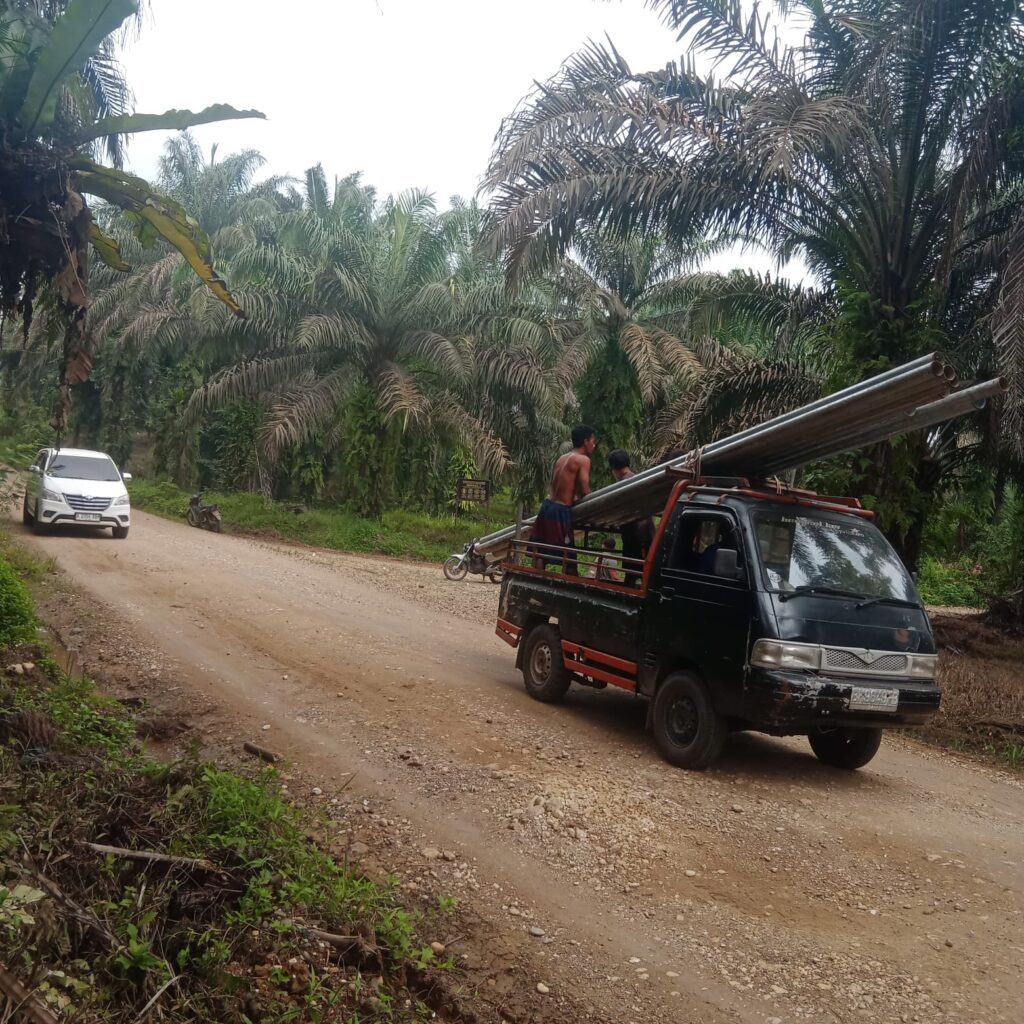
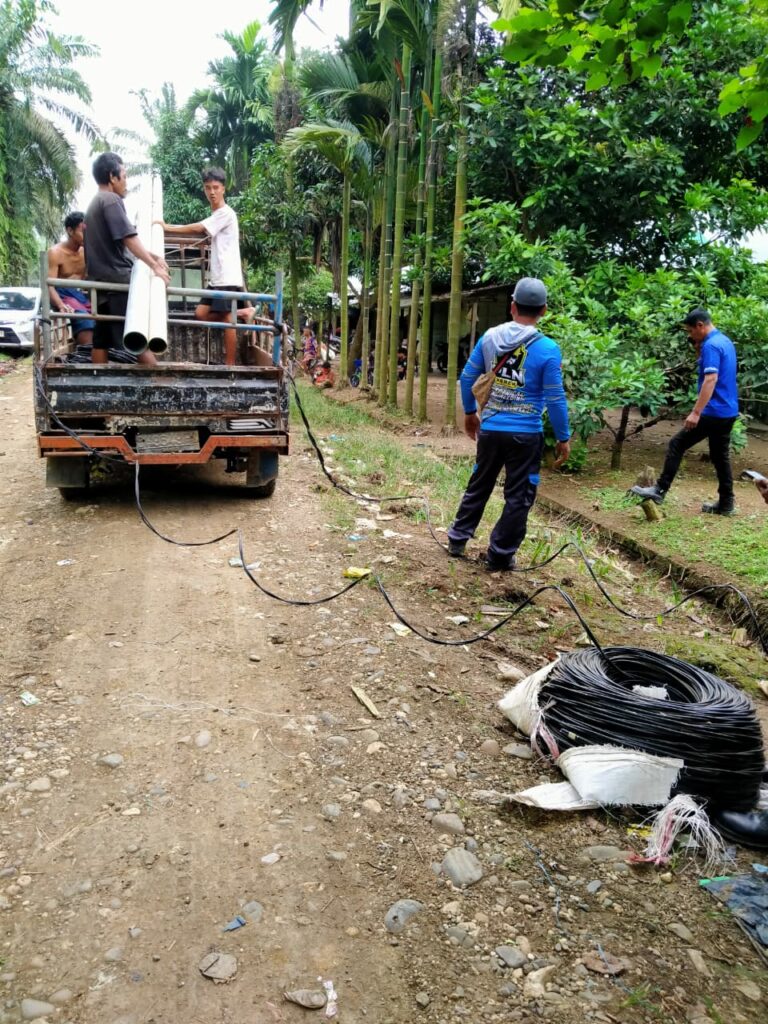
Through mutual cooperation, residents raised funds to purchase two rolls of cable and 20 galvanized poles. While the amount wasn't enough to cover all their needs, it demonstrated that they weren't simply waiting for aid to arrive.
Unmet needs were then brought to Alyatama, a Ministry of Social Affairs center mandated to provide services to vulnerable groups. Proposals were developed based on actual needs in the field and consulted with PLN Bangko and PLN Pamenang to ensure all material specifications met technical standards.
As a result, Alyatama approved an initial grant of Rp 24.5 million. When the final calculation revealed a material shortage, they provided an additional Rp 25 million, bringing the total support to Rp 49.5 million. According to Dedy, an Alyatama advisor, this decision aligns with the agency's mandate. "The Orang Rimba are included in our service targets as a vulnerable group and fall within decile one. Therefore, they are a priority."
However, funding doesn't automatically solve the problem. PLN explained that communities have two options: wait for the village network construction, which has yet to be finalized, or build the network independently, with the costs shared.
The second option was decided upon. Simultaneously, WARSI and the Pauh Menang Village Government approached each plantation owner through which the power line would pass. Through deliberation, permits were finally obtained, allowing construction to proceed without land conflicts.
In the midst of this process, unexpected news arrived. The proposal previously submitted to PLN was included in the Village Electrification Program (Lisdes) discussion. The team then conducted a direct inspection of the Rombong Ngilo settlement. The results of this inspection changed the scale of the work. Not only did the Lisdes Program help provide electricity to the settlement, but it also planned to add transformers to maintain stable voltage.
The improvements didn't stop there. Old electricity poles in Pauh Menang Village, which residents had used for years, were replaced with larger-capacity poles as part of the network development to Rombong Ngilo.
This means that the benefits of development are felt not only by the Suku Anak Dalam community, but also by the village community as a whole. For Rombong Ngilo, the arrival of electricity has truly transformed their lives.
Children now have more adequate lighting for learning. Families no longer rely on smoky oil lamps. Mobile phones can be charged from home, and the use of water pumps has become possible. But the most important change isn't just the lights finally coming on.
The journey to electricity demonstrates that access to basic services for indigenous communities often extends beyond infrastructure. It is influenced by bureaucracy, technical standards, inter-agency coordination, and the ability to bridge diverse interests.
For over twenty years, the Rombong Ngilo community has been trying to adapt to village life. They have built gardens, attended community meetings, and participated in various development processes. But access to electricity was only realized when the community, village government, supporting institutions, the Ministry of Social Affairs, and PLN worked together to overcome the overlapping obstacles.
Rombong Ngilo's story is ultimately more than just about the electricity finally coming on. It shows that the right to basic services is often not enough to fight for simply by expressing a need. These rights require dialogue, cross-institutional coordination, and a willingness to find solutions together so that groups who have long been marginalized can truly be part of development.