By: Reinaldi, Mentawai Independent Image Foundation (YCMM)
In Sagitci Tengah Hamlet, Nemnemleleu Village, Mentawai Islands, pigs are more than just livestock. They help pay school fees, cover emergencies, and prepare for traditional celebrations without going into debt. Nearly every family keeps pigs, and in almost every household, it's the women who are most often behind the pen: feeding, cleaning, and ensuring the animals survive.
Until now, this work has been considered ordinary because it's part of women's daily lives. Pigs are fed kitchen scraps, their pens are simple, and their health is rarely given serious attention. Sows often give birth to only one or two calves. Many animals are unhealthy and don't sell well. However, with better planning, pig farming could be a much stronger economic resource.
Change began to be felt when the Citra Mandiri Mentawai Foundation, through the Sipaumat Program, came up with a simple approach: to find out who was actually most involved in livestock management, and the answer was consistent: women.
This led to the birth of the Riu Riu Akek women's livestock group in November 2024. Ten women joined, each receiving two pigs from aspirational support (pokir). In this region, approximately 80 percent of families own pigs, so this initiative wasn't about introducing something new, but rather strengthening a long-standing practice.
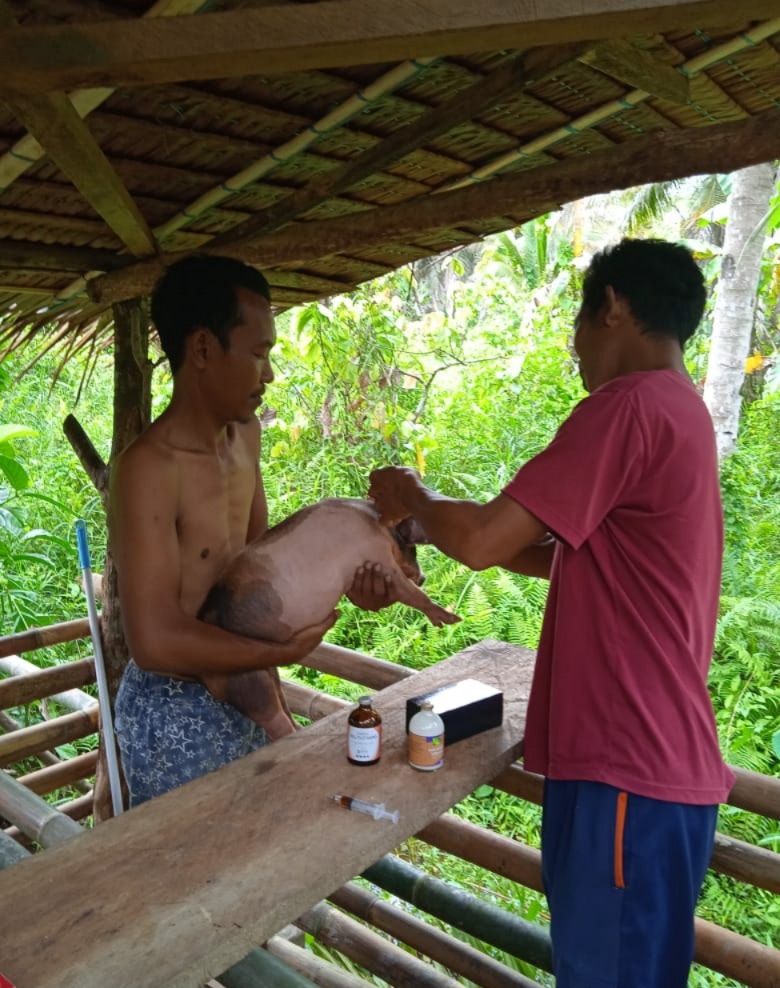
This group began learning about clean pens, better feed, disease prevention, and vaccination through economic empowerment training. This technical training was facilitated by a young villager named Arel Feltu, who had previously attended livestock training in North Sumatra. His role as a knowledge liaison and assistant was crucial, but the women themselves remained the ones implementing the day-to-day changes.
Since then, the Riu Riu Akek women's group has become more meticulous. Pens are cleaned more regularly. Feed is no longer just kitchen scraps if the livestock are destined for sale. If there are signs of illness, they discuss and immediately find solutions. Gradually, the livestock's health improves and productivity increases.
In many Riu Riu Akek households, the decision to sell livestock rests with women. Husbands help, especially with physical labor. This demonstrates that women already have considerable decision-making power in the livestock context.
However, behind this, the division of roles at home isn't necessarily entirely equal. Members say they don't feel burdened. Caring for livestock is indeed part of their daily lives, along with cooking, laundry, and childcare. But gender awareness reminds us that feeling "okay" doesn't necessarily mean the burden is light or fair. This is where strengthening gender awareness continues. This is because mentoring doesn't stop at the technical aspects of farming. Discussions about role division are being gradually introduced.
Some members are beginning to notice small changes. Some husbands are helping clean cages or look after the children while their wives attend group meetings. While not yet widespread, these signs indicate that economic change can open the door to discussions about role equity in the household.
In a larger setting, group meetings gave women more confidence to speak. They discussed selling prices, livestock health, and even business development plans. This experience gradually influenced their presentation at village forums. They no longer spoke solely about domestic matters, but also about economics and planning.
Previously, access to livestock services was not always easy. Information about vaccines or livestock health standards did not regularly reach the villages. With the existence of organized women's groups, along with the strengthening of knowledge from mentors and facilitators, needs became clearer and easier to articulate. They now have bargaining power as a group.
The most noticeable change is not only in the healthier condition of the livestock, but also in their perspective. Pigs are no longer seen as mere waste disposal, but rather as assets that require serious care. Women are no longer seen simply as "helpers," but as key managers.
In South Sipora, this initiative is still underway. The Riu Riu Akek group has demonstrated that when women are given space and knowledge, family finances become more planned. However, the next step is to ensure that these economic changes go hand in hand with changes in family relationships—so that empowering women doesn't mean adding burdens, but rather a more equitable and mutually supportive division of roles.