By: Ani Safitri, KKI Warsi
"I used to not want to grow coffee. Now I grow coffee for my children and grandchildren. I want this coffee to be able to send my children to school."
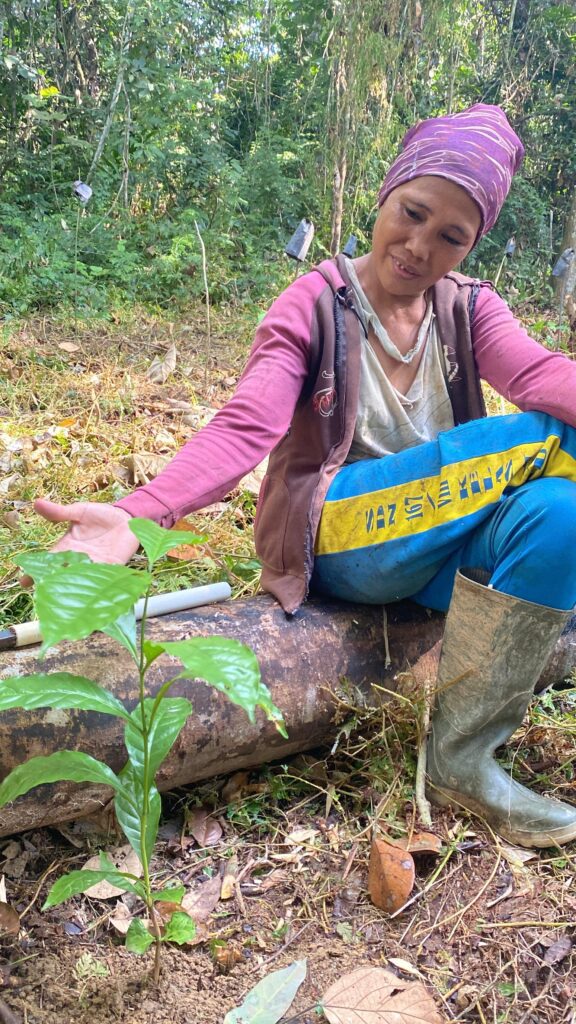
Minar said this while pointing to a row of coffee seedlings growing among his rubber plantation. The seedlings weren't tall yet, and the fruit would still have to wait several years. However, for Minar, coffee was no longer just a plant he was tending. It was in it that he placed his hopes for his family's future.
A few years ago, it would have been difficult to imagine the women of Talang Mamak talking about coffee as a source of livelihood. Rubber had been the primary source of income for their families. They helped almost daily with rubber tapping, housework, childcare, meal preparation, and gardening. Amidst this workload, growing coffee was considered unimportant. It was viewed as a supplementary crop that didn't necessarily provide any benefits.
This perspective didn't change immediately when coffee seedlings began to be distributed through the reforestation program. On the contrary, most people chose not to take them. Their experience with various external programs made them cautious. They weren't yet convinced that coffee was worth growing, let alone as part of their family's livelihood strategy.
Change begins to grow when people are given the opportunity to learn, not just receive help.
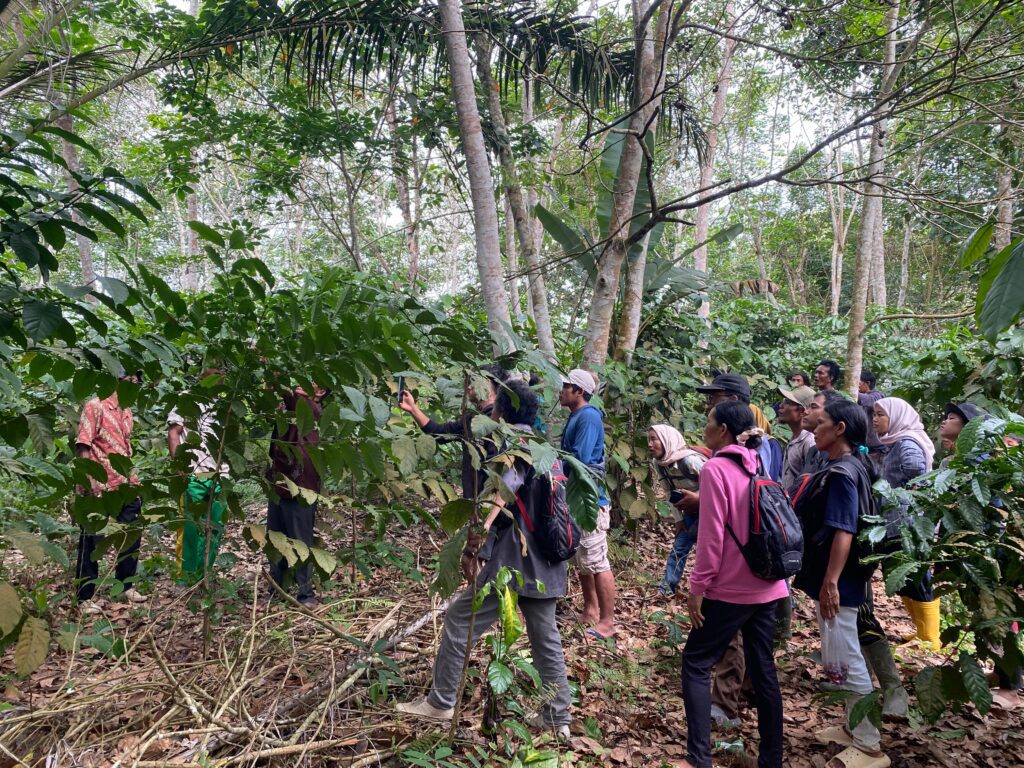
Through the assistance of KKI WARSI, women members of the Women Farmers Group began attending coffee cultivation field schools. They learned how to identify pests, germinate cherry seeds, transplant seedlings into polybags, and plant coffee in agroforestry areas. This knowledge provided initial knowledge, but it wasn't enough to change their beliefs.
New changes were felt when they met farmers who had already proven that coffee could be a source of livelihood.
Pak Juna, a coffee farmer from Semambu, does not speak in technical terms. He told the story as a fellow farmer. He shows how coffee can grow alongside rubber, how to care for the plants to keep them productive, and how patience during the first few years will pay off when the plants begin to produce. Real experience makes knowledge feel closer to people's daily lives.
The learning continued with a visit to Mbah Man's plantation in the Wildlife Conservation Area (WCA). There, they witnessed the entire coffee management process, from nursery to post-harvest. They saw how coffee is harvested, dried, and processed into various products, all of which have a much higher selling value when properly managed.
What left a lasting impression wasn't just the cultivation technique, but the realization that coffee could be a source of livelihood without clearing new forests. They returned home with red cherries to sow themselves, and with the belief that what they saw could be replicated in their village.
The changes began to appear a few months later.
The seedlings were grown in their yards and then transplanted into the rubber plantations. Each member of the Women's Farmers Group planted around 40 to 50 seedlings. Even before the seedlings were distributed, some women had already foraged for wild coffee seedlings to plant. They no longer waited for assistance to arrive but took the initiative.
It's not just the number of plants that has changed.
They began to pay attention to plant spacing, choose shade trees, and care for plants following the knowledge they gained during the learning process. Coffee is no longer treated as an additional crop, but rather part of the family's long-term planning.
For Minar, the decision to plant coffee stemmed from a very simple hope: that her children would have the opportunity to attend a higher level of schooling than she did. This hope was shared by the other women in the group. They saw coffee as an opportunity to increase their family's future income while reducing dependence on a single commodity.
Behind these changes, there are other processes that are not always visible.
As a field assistant living among the community, Ani observed that women shouldered a long workload. They took care of the house, helped with garden work, and participated in various group activities. However, they often had less space for learning, discussion, and making economic decisions than men.
As a result, women's classes and Women Farmers Group meetings have become more than just places to learn about coffee cultivation. These spaces have gradually become places for women to share experiences, discuss the problems they face, and develop solutions together.
One concrete example emerged through the practice of mutual cooperation they call palorien. When clearing land and planting coffee, they work in shifts from one member's garden to another. This method emerged from group discussions as a response to the limited energy and time available to each family. By working together, the initially daunting task becomes easier, while the bonds between the women grow stronger.
For Ani, the most significant change isn't simply the increase in the number of coffee seedlings planted. Far more significant is seeing women begin to have the space to make decisions about the resources they will manage in the future. Coffee is no longer a crop chosen because of a program, but because they themselves see the benefits it brings to their families and communities.
This journey is certainly not over. New coffee plants will begin producing approximately three to three and a half years after planting. This waiting period presents its own challenges. Therefore, ongoing support includes plant care, strengthening cultivation capacity, and post-harvest processing to ensure the coffee produces better quality and higher selling value.
The changes in Talang Mamak demonstrate that building sustainable livelihoods doesn't begin with distributing seeds, but rather with growing trust and knowledge within the community itself. When women have a safe learning space, opportunities to share experiences, and support in decision-making, they are not just growing coffee. They are planting hope, strengthening their families' economic resilience, and preparing for a future of their own choosing.